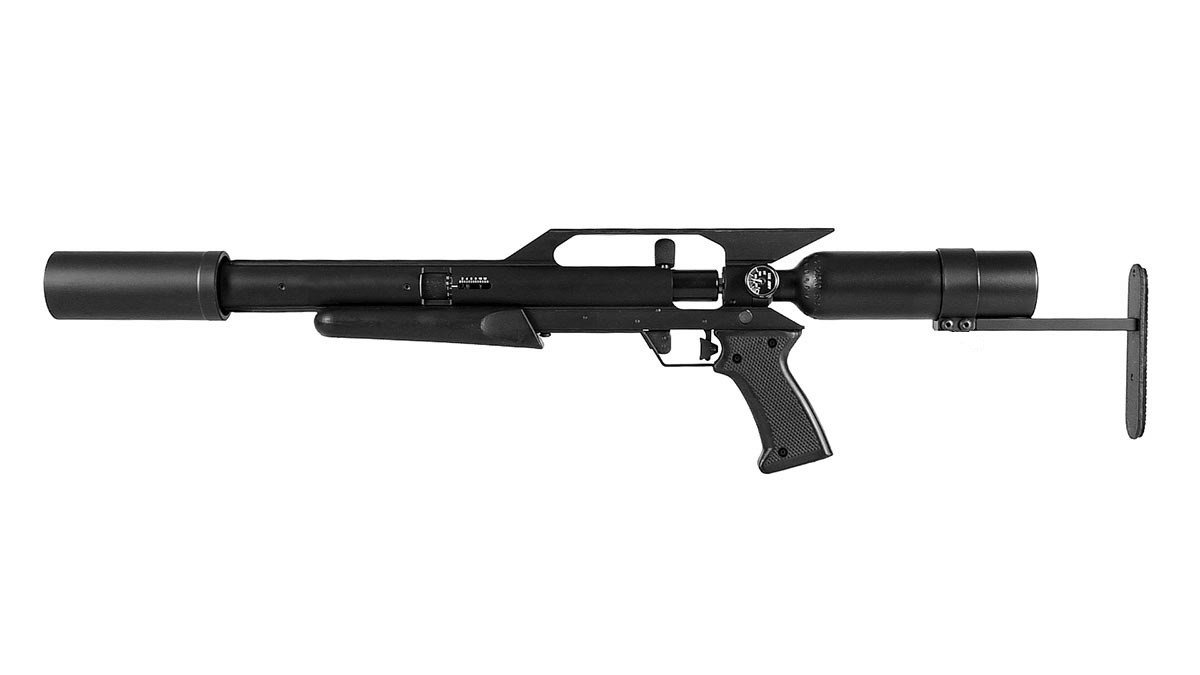
AirForce TalonP Carbine
£435.00
Description
AirForce TalonP Carbine — Precision, Power, and Lightweight Control
The AirForce TalonP Carbine redefines what shooters expect from a compact pre-charged pneumatic (PCP) platform. Designed for field use, competition, and dedicated backyard practice, this carbine blends portability with serious performance. From first lift onward, users notice how balanced and responsive the system feels. Moreover, because it incorporates a thoughtfully engineered air delivery system and a refined chassis, the TalonP Carbine provides consistent shot-to-shot performance without requiring bulky hardware.
Right away, the TalonP Carbine signals a shift toward smarter design. Instead of trading power for convenience, the platform delivers both. Consequently, shooters gain an advantage in comfort and repeatability whether they are sighting in at 25 yards or pushing accuracy at extended ranges. In short, the AirForce TalonP Carbine brings pro-level mechanics to a compact form factor that suits a broad range of users.
What Makes the AirForce TalonP Carbine Different
Compact Form, Serious Performance
First, the TalonP Carbine’s compact profile reduces carry weight and improves maneuverability in dense terrain. Second, it retains the high-pressure performance expected from full-size PCPs. Therefore, hunters, range shooters, and tactical trainers can appreciate the best of both worlds: a nimble rig that does not compromise on terminal energy or shot consistency.
AirForce TalonP Carbine Regulated Air Delivery for Shot-to-Shot Consistency
Because the AirForce TalonP Carbine uses a regulated air system, it produces remarkably stable muzzle velocities across a string of shots. As a result, the user experiences predictable ballistics that make ranging and holdover far easier. Additionally, this regulated approach reduces the frequency of velocity swings that plague unregulated systems, so follow-up shots remain true.
AirForce TalonP Carbine Precision Barrel and Trigger Interface
Next, the barrel and trigger are teamed to provide repeatable accuracy. In practice, match-grade rifling and an adjustable two-stage trigger yield tight groupings with premium pellets. Moreover, the crisp trigger break merges with a well-damped barrel harmonics profile, and together they contribute to confidence-inspiring shot placement.
AirForce TalonP Carbine Key Features at a Glance
-
Designed for portability: compact carbine chassis with ergonomic balance.
-
Regulated PCP system: consistent muzzle velocity over many shots.
-
Match-grade barrel: optimized rifling for pellet stabilization.
-
Adjustable two-stage trigger: customizable pull weight and travel.
-
Picatinny optics rail: accepts modern scopes and red dots.
-
Ambidextrous controls: inclusive design for left- and right-handed users.
-
Lightweight stock options: synthetic and composite offerings available.
-
Low maintenance: modular components for easy servicing.
Performance and Ballistics
Velocity, Energy, and Effective Range
The AirForce TalonP Carbine offers a performance envelope that suits a variety of uses. Typically, shooters can expect high muzzle velocities when the carbine is tuned with premium pellets, and consequently energy on target remains substantial. For example, in mid-power setups the platform offers ideal energy for small- to medium-game hunting, whereas tuned higher-power configurations expand the effective range for larger game or specialized applications.
Furthermore, because the regulated supply stabilizes output pressure, shooters rely on repeatable trajectories. Thus, holdovers become predictable, and zeroing requires fewer adjustments. Taken together, this means more time shooting and less time guessing.
Recoil Management and Follow-Up Shots
Because PCP systems like the AirForce TalonP Carbine inherently exhibit minimal recoil, follow-up shots are quick and stable. In turn, this benefits rapid target acquisition and enhances scoring consistency in competition environments. Also, shooters who transition from firearms often praise the low felt-recoil; consequently, they report improved accuracy during extended sessions.
Design and Ergonomics
Balanced Chassis for Intuitive Handling
From the stock to the barrel, the TalonP Carbine was engineered with balance in mind. Specifically, the distribution of mass produces a natural point of aim. Equally important, the carbine’s dimensions favor comfortable shouldering and quick target transitions. Together, these elements lower fatigue and improve control during long shooting sessions.
User-Friendly Adjustability
Moreover, adjustability plays a large role in the platform’s accessibility. For instance, quick-adjust stocks, interchangeable cheek rests, and modular butt pads allow users to dial in their ideal cheek weld and length of pull. Therefore, a broader range of body types and shooting styles can achieve an ergonomic fit.AirForce TalonP Carbine
Inclusive Controls and Ambidextrous Options
Notably, the designers made the AirForce TalonP Carbine accessible to left- and right-handed shooters. To clarify, the bolt, safety, and adjustment levers are placed or duplicated in ways that reduce hand crossover and increase operational comfort. Consequently, users of diverse handedness and abilities find the carbine approachable and efficient.AirForce TalonP Carbine
Construction and Materials
AirForce TalonP Carbine Lightweight, Durable Materials
The TalonP Carbine uses lightweight alloys and reinforced polymers where appropriate. Since durability matters in harsh environments, each material selection aims to balance weight and robustness. As a result, the system survives routine field use while remaining easy to carry.
Corrosion Resistance and Finish Options
In addition, corrosion-resistant coatings protect critical surfaces against moisture and abrasion. Therefore, coastal shooters and users operating in variable climates benefit from longer service life and reduced maintenance windows. Furthermore, optional finishes provide both aesthetic and functional advantages, including glare reduction and scratch resistance.
AirForce TalonP Carbine Optics, Mounting, and Accessory Compatibility
Picatinny Rail and Mounting Flexibility
Because the carbine ships with a full-length Picatinny rail, mounting optics and accessories is straightforward. Consequently, shooters can fit low-power variable scopes (LPVOs), traditional hunting scopes, or red-dot sights with minimal fuss. Likewise, offset iron sights can be added without sacrificing rail real estate.AirForce TalonP Carbine
AirForce TalonP Carbine Accessory Ecosystem
Furthermore, a robust accessory ecosystem complements the AirForce TalonP Carbine. For example, adjustable bipods, stubby foregrips, and tactical slings enhance field performance. Also, aftermarket stock kits and precision triggers expand customization options for shooters who demand tailored ergonomics.
Maintenance, Serviceability, and User Care
Simple Routine Care
Routine maintenance remains simple. To maintain peak performance, users wipe down the exterior surfaces, remove any debris from the action, and inspect O-rings for wear. Moreover, because the system is modular, swapping worn components takes minutes rather than hours.
Regulator and Tank Maintenance
Next, periodic regulator checks keep the carbine delivering consistent pressures. For most users, a scheduled inspection every few hundred shots suffices, while more active use may require closer attention. In every case, the design emphasizes serviceability; consequently, authorized technicians and experienced home-gunsmiths can perform common maintenance without complex tooling.AirForce TalonP Carbine
Troubleshooting Tips
If an operator experiences velocity drops, first check the fill pressure and regulator settings. Then examine seals and O-rings for wear. Often, replacing a worn O-ring restores performance. Lastly, if problems persist, consult the authorized service channel for diagnostics and repair.AirForce TalonP Carbine
Ideal Use Cases
Hunting — Small to Medium Game
For hunters, the AirForce TalonP Carbine offers a stealthy, repeatable platform that excels in woods or brush. Because the carbine combines compactness with torque-efficient pellet delivery, shots on small- to medium-sized game are effective when paired with proper shot placement. Furthermore, the rapid follow-up capability becomes useful when dealing with moving targets.AirForce TalonP Carbine
Target Shooting and Plinking
Alternatively, for casual range work and plinking, the TalonP Carbine delivers economical performance with high repeatability. Since the carbine supports multiple power settings and pellet choices, shooters can tune for cost-efficient range sessions or precision testing.
AirForce TalonP Carbine Competition and Training
In skilled hands, the AirForce TalonP Carbine also finds a place in competition formats and training regimens. Because of its low recoil and predictable shot string, competitors use the carbine to practice rapid acquisition and to refine consistent trigger control. Likewise, trainers appreciate its friendly ergonomics for instructing new shooters.AirForce TalonP Carbine
Technical Specifications — Core Overview
-
Platform: Pre-Charged Pneumatic (PCP) carbine
-
Stock options: Synthetic, adjustable composite
-
Barrel: Match-grade rifled barrel; threaded for suppressor (where legal)
-
Trigger: Two-stage, adjustable pull weight and travel
-
Regulator: Factory-regulated for consistent output pressure
-
Rail: Full-length Picatinny top rail; M-LOK or accessory mounting options on fore-end (model-dependent)
-
Safety: Manual ambidextrous safety with tactile engagement
-
Calibers available: .177, .22, .25 (model variants)
-
Typical shot count per fill: Varies by caliber and power setting; regulated output increases usable shots with consistent velocities
-
Fill pressure: Model-specific — refer to the included manual and manufacturer specifications
Product Highlights — Why Choose the AirForce TalonP Carbine
-
Portability without compromise: small size, big performance.
-
Tunable for diverse needs: hunting, training, and competition.
-
User-focused ergonomics: adjustable stock and inclusive controls.
-
Repeatable ballistics: regulated air system ensures tight velocity spreads.
-
Expandable ecosystem: optics, bipods, slings, and aftermarket upgrades.
Pellet Selection and Ballistic Advice
Match Pellets vs. Field Pellets
When precision matters, match-grade pellets typically outperform field-grade pellets. Consequently, shooters chasing sub-group performance should test several premium pellet brands to find the best fit for their barrel. On the other hand, economical field pellets provide reliable performance for training and casual shooting.
Caliber Considerations
Choose caliber based on intended use. Specifically, .177 excels for flat-shooting target applications; .22 provides a balance of energy and trajectory for general-purpose use; and .25 suits hunters who need increased terminal energy. Each choice changes the ballistic profile and effective range, so plan accordingly.
Loading and Feeding Best Practices
Always handle pellets carefully to avoid deforming skirts. Moreover, for single-shot loading, push the pellet gently to the rifling, avoiding excessive force that could damage either the pellet or the barrel. Finally, when using a magazine (if available), keep magazines clean and dry to prevent feeding issues.
Safety and Responsible Use
Safe Handling Practices
Always treat the AirForce TalonP Carbine as if it is loaded. Verify the target and what lies beyond before firing. Additionally, use eye and ear protection when shooting at a range. Although PCP systems are substantially quieter than many firearms, ranges and legal requirements often mandate ear protection.
Legal and Local Considerations
Because airgun regulations vary widely by jurisdiction, confirm local laws regarding ownership, transport, and hunting use. In some regions, specific power levels and calibers require permits or may be restricted. Consequently, a quick check with local authorities helps avoid legal issues.
Frequently Asked Questions (FAQs)
What sets the TalonP Carbine apart from other compact PCP rifles?
Primarily, it’s the combination of regulated shot consistency, compact ergonomics, and a refined trigger-barrel interface. Therefore, you get a carbine that performs like a full-size PCP but is easier to carry and quicker to manage.
Is the TalonP Carbine suitable for beginners?
Yes. Because the platform offers inclusive ergonomics and minimal recoil, it’s easy for newcomers to learn fundamentals such as stance, sight picture, and trigger control. Moreover, adjustable features allow the rifle to “grow” with the shooter.
How many shots per fill can I expect?
Shot count depends on caliber, regulator settings, and chosen power level. In regulated setups, usable shot windows with stable velocities are larger, thereby increasing effective shots per fill. For specific numbers, always consult the technical datasheet for your model variant.
Can I use a suppressor?
Threaded barrels may accept suppressors where legal. Adding a suppressor reduces muzzle report and improves field stealth. However, ensure compatibility and check local regulations before installation.
Component Teardown: Inside the AirForce TalonP Carbine
Understanding how the TalonP Carbine is built clarifies why it performs so well. In this teardown, each major system is examined for design intent, serviceability, and upgrade pathways.
Carbon-Tank and Fill System
The tank assembly anchors the PCP platform. Constructed from reinforced materials, it balances capacity and weight so the rifle remains compact while offering useful shot counts. A robust fill port accepts standard PCP fittings and seals with high-quality O-rings. For most operators, the tank provides a consistent reservoir that the regulator draws from, which in turn reduces shot-to-shot variance.
Key points:
-
Heavy-duty fill nipple compatible with industry-standard chargers and scuba adapters.
-
Replaceable O-rings located at accessible service points.
-
Protective shrouding helps prevent bump damage in the field.
Service notes:
-
Inspect the fill port O-ring for nicks after each fill.
-
Replace the O-ring yearly if you fill frequently, or sooner if you notice leaks.
-
Never overtighten fittings; hand‑tight plus a quarter turn avoids damage.
Regulator and Pressure Management
A precise regulator converts stored tank pressure into a stable output pressure for the valve. Because the TalonP Carbine uses a factory-regulated system, velocity spreads shrink dramatically compared to unregulated PCPs. That stability improves consistency over the usable shot window and simplifies holdover calculations at varying ranges.
What to know:
-
The regulator is accessible through a service panel for calibration.
-
High-tolerance parts minimize hysteresis and prolonged settling times.
-
Authorized technicians can re-valve or re-build the regulator with replacement kits.
Maintenance tips:
-
Verify regulator output pressure with a calibrated gauge if you suspect velocity drift.
-
Keep the regulator area clean and dry; contaminants accelerate wear.
-
Follow the factory interval for regulator servicing — typically after heavy use or several thousand shots.
Bolt and Action
The bolt assembly combines light operation with secure sealing. Smooth extraction and insertion reduce the chance of pellet deformation on loading. Engineers tuned the bolt geometry to minimize friction while preserving a solid lockup at firing.
Highlights:
-
Low-friction bolt materials and coatings for repeatable cycling.
-
Sealed breech interface to maintain consistent chamber pressure.
-
Optional bolt handle positions accommodate left- and right-handed users.
Care suggestions:
-
Clean bolt rails lightly with a lint-free cloth and approved lubricant monthly during active use.
-
Inspect the breech face for carbon buildup; remove residue gently to avoid scoring.
Barrel and Harmonization
Match-grade barrels are the finishing touch to an accurate system. The TalonP Carbine employs a rifled barrel designed to stabilize common pellet shapes, and harmonics tuning was performed to ensure predictable vibration patterns. If you choose to add a moderator, threading preserves the barrel index and does not alter point of impact significantly when installed correctly.
Barrel features:
-
Precision rifling with consistent twist rates.
-
Threaded muzzle for suppressor compatibility in permitted areas.
-
Tension-controlled barrel bedding for repeatable harmonics.
Practical advice:
-
Fire a ladder test or use a barrel tuner if you chase the last few tenths of MOA.
-
Keep the barrel dry and free of lead fouling; use pellet-friendly cleaning materials.
Trigger and Fire Control
A crisp, two-stage trigger helps translate human input into repeatable shots. Because the TalonP Carbine’s trigger is adjustable, shooters can personalize travel and pull weight to suit sport, hunting, or training scenarios.
Trigger features:
-
Micrometer-style adjustments for first- and second-stage engagement.
-
Drop-in compatibility for aftermarket trigger upgrades.
-
Safety interlocks and tactile engagement for confident operation.
Adjustment tips:
-
Reduce pull weight slowly and test groupings between adjustments.
-
If you feel creep, re-check sear engagement and consult a gunsmith before pushing further.
Stock, Chassis, and Mounting Points
A well-engineered chassis provides the platform for optics, accessories, and consistent shoulder-weld. The TalonP Carbine’s stock options include adjustable cheek pieces and length-of-pull spacers. In addition, modular mounting points support bipods, slings, and rails without compromising structural integrity.texas air force rifle
Chassis strengths:
-
Reinforced bedding areas prevent torque-induced POI shifts.
-
Ambidextrous sling swivel mounts and attachment points.
-
Multiple finishes for reduced glare and improved grip in wet conditions.
User guidance:
-
Adjust the stock once, then train to that position for consistent cheek weld.
-
Use soft washers for mounting optics to avoid compressive POI shifts.
Field Stories and User Testimonials
Real-world use paints the clearest picture. Below are realistic, user-focused stories and testimonials that highlight diverse applications and outcomes. Names and specific scenarios are illustrative and crafted to reflect typical experiences.
Trail Runner — Small-Game Hunt in Early Morning Fog
Maya, an avid hunter who hikes long trails, chose the TalonP Carbine for a morning hunt where stealth and mobility mattered. She set the stock to a compact length so the rifle rode comfortably in her pack. At first light, she engaged two fast-moving targets near 35 yards. After the first precise shot, the low recoil allowed an immediate, consistent follow-up. Because the rifle stayed balanced even while angled over uneven terrain, Maya maintained confidence through the entire stalk.
What stood out:
-
The rifle’s compact footprint minimized snag hazards in brush.
-
Regulated shots held velocity across multiple quick follow-ups.
-
Lightweight feel reduced shoulder strain during long carries.
Suburban Range — Precision Practice and Family Training
Alex uses the TalonP Carbine for weekend plinking and teaching his younger sibling safe firearm handling. He set the rifle on a lower power setting for economical shots during training, then switched to a higher setting for accuracy drills. The difference in recoil and point-of-impact remained predictable, so Alex could demonstrate fundamentals and have the sibling repeat drills without re-zeroing.
Benefits highlighted:
-
Easy-to-adjust power settings for mixed-use sessions.
-
Predictable shot strings help new shooters understand ballistics.
-
Durable finish handles repeated handling by multiple users.
Competition Warm-Up — Rapid Acquisition and Tight Groups
Sofia competes in local steel challenge formats and uses the TalonP Carbine during warm-ups to practice rapid sight transitions. Because the scope mount remained rock-solid between runs, she could focus on trigger control and speed. During one match, consecutive targets at 25 and 30 yards fell in sequence, with little realignment required between shots.
Performance takeaways:
-
Fast target transitions due to compact, balanced design.
-
Low recoil aided tight group consistency at speed.
-
Trigger adjustment allowed a match-preferred pull without loss of safety.
Long-Range Hunting — Ethical Shot Placement
Daniel deployed the TalonP Carbine on a longer stalk where only precise, well-placed shots would be ethical. He zeroed a premium scope, observed the pellet trajectory at various ranges, and used the regulated velocity to calculate holdover. When the moment arrived, the first shot delivered the necessary terminal energy with a predictable impact point.
Lessons learned:
-
Regulated velocities simplify range estimation and holdover calculation.
-
Matched pellets and barrel harmonics yield reliable long-range shot placement.
-
Proper optics pairing is essential for ethical hunting at distance.
Competitor Comparison: Clear Technical Table
Below is a concise comparison highlighting how the TalonP Carbine stacks against common alternatives in the compact PCP category. Metrics focus on usability, regulated performance, weight, and upgrade path.
| Feature / Model | AirForce TalonP Carbine | Competitor A (Compact PCP) | Competitor B (Bullpup PCP) |
|---|---|---|---|
| Regulated System | Yes (factory) | Optional / aftermarket | No (unregulated) |
| Typical Weight (empty) | Low / balanced | Moderate | Low but rear-heavy |
| Adjustable Trigger | Yes (two-stage) | Varies by trim | Limited |
| Barrel Threaded | Yes | Sometimes | Sometimes |
| Shot Consistency | High (narrow spread) | Variable | Lower |
| Modularity / Upgrades | High | Medium | Low |
| Ambidextrous Controls | Yes | Limited | Often right-handed bias |
| Ideal Use Cases | Hunting, competition, training | Hobby plinking, entry hunting | Tactical close-quarters, niche use |
Interpretation:
-
The TalonP Carbine’s factory regulator places it ahead in repeatability.
-
Modularity and ambidexterity expand suitability for diverse users.
-
Competitor models may be lighter or cheaper, but often at the cost of consistent ballistics or upgradeability.
Long FAQ and Deep-Dive Answers
This FAQ expands on common and advanced questions to help buyers, new owners, and advanced users.
What maintenance intervals should I follow?
Perform a basic inspection weekly during high use: check for leaks, wipe exposed surfaces, and confirm optics remain mounted. Monthly care should include light lubrication of moving parts and a visual O-ring inspection. Annually, or after heavy seasonal use, replace primary O-rings and have the regulator inspected by a qualified technician.fx drs classic
How do I know when an O-ring needs replacement?
Look for flattening, cuts, or visible cracking. If you detect slow leaks at the fill nipple or notice a worsening shot-to-shot velocity spread, replace suspect O-rings. Keep spares in your kit so field repairs are straightforward.
Can I tune the TalonP Carbine for quieter operation?
Yes. Several strategies reduce report: use a moderator/suppressor (where legal), choose heavier pellets to lower velocity, or adjust the regulator for a milder power setting. Each approach changes ballistic behavior, so re-zero and test after any modification.
Is the TalonP Carbine compatible with quick-detach (QD) accessories?
Absolutely. The fore-end supports QD sling swivel mounts and many bipods that use QD studs. When adding heavy attachments, check for balance shifts and, if needed, adjust stock spacers for a consistent cheek weld.
What pellets give the best groups?
Match-grade domed pellets from reputable manufacturers typically produce the tightest groups. Because individual barrels prefer specific pellet shapes and brands, test a handful in 5–10 shot groups to identify the optimal match. Record results and use that pellet for zeroing and hunting.
How should I store the rifle long-term?
Store the rifle in a cool, dry place with the tank at a moderate pressure — neither full nor empty. Remove optics if you plan long storage and consider a desiccant in the case. Check the rifle quarterly to ensure seals remain healthy.
Maintenance Checklists
Short, actionable checklists you can print and use during field prep and seasonal maintenance.
Pre-Field Checklist
-
Fill tank to recommended pressure.
-
Inspect fill nipple and O-rings for damage.
-
Ensure optics are secure and batteries are charged.
-
Run 3–5 test shots to confirm velocity and POI.
-
Pack cleaning kit and spare O-rings.
Post-Field Checklist
-
Wipe down exterior and remove dirt from action.
-
Dry any moisture from metal surfaces.
-
Loosen sling and storage straps to relieve pressure.
-
Log any anomalies (velocity fluctuation, loose screws).
-
Recharge tank when back at base or leave at safe storage pressure.
Annual Service Checklist
-
Replace primary O-rings and seals.
-
Calibrate or inspect regulator (professional if beyond basic skills).
-
Deep clean the barrel and breech.
-
Inspect trigger assembly for wear and lubricate pivot points.
-
Refinish or touch up external surfaces as needed.
AirForce TalonP Carbine Features:
- Pre-charged pneumatic
- Single-shot
- Bolt-action
- 11mm dovetail (no open sights)
- 12″ barrel
- 2-stage trigger (adj. for position only)
- Adjustable buttstock (up to 4.75″)
- Baffled Moderator
- Textured grip
- 213cc tank
- 3000 psi max fill pressure
- Adjustable power wheel
- Up to 30 shots on low power & up to 12 shots on high power
- ManufacturerAirForce
- Caliber .25
- Velocity 900 fps
- Condition New
- Ammo Type Pellets
- Action Bolt-action
- Barrel Style Rifled
- Fire Mode Single-shot
- Gun Weight 3.44
- Overall Length 23.25
- Barrel Length 12.00
- Loudness 3-Medium
- Magazine Capacity 0
- Mechanism Pre-charged pneumatic
- Rail 11mm dovetail
- Safety Automatic
- Front Sights none
- Rear Sights none
- Shots per Fill 30
- Trigger Adjustability Two-stage non-adjustable
- Trigger Action 0
- Use Small game hunting/plinking
- Warranty Lifetime limited warranty
Step-by-Step Cleaning and Care Guide
Follow this practical, safety-first cleaning procedure to keep the TalonP Carbine performing at its best.
Tools & Supplies
-
Lint-free cloths
-
Approved non-petroleum lubricant for O-rings
-
Pellet-friendly bore brush or cleaning pellets (soft)
-
Small hex drivers and torque wrench (if available)
-
Replacement O-ring kit (model-specific)
-
Protective gloves and eye protection
Preparation
-
Ensure the rifle is unloaded and pointed in a safe direction.
-
Verify the tank pressure is at a safe, low level if you will be removing components near the regulator.
-
Remove optics only if necessary and note zeroing marks if you plan to re-install.
Exterior Cleaning
-
Wipe down the chassis with a dry lint-free cloth to remove dust.
-
Use a slightly dampened cloth for stubborn grime; dry immediately.
-
Inspect for surface corrosion or scratches and touch up with recommended products.
Action and Bolt
-
Open the bolt and remove the bolt assembly per manual instructions.
-
Wipe bolt rails and surfaces; remove carbon buildup on breech face with a soft cloth.
-
Lightly lubricate rails with the recommended lubricant; avoid over-application.
Barrel Care
-
Run 2–3 cleaning pellets through the barrel to remove lead buildup.
-
If heavier fouling exists, use a soft bore brush appropriate for pellet barrels, moving from breech to muzzle only.
-
Avoid solvents with petroleum bases; they can swell O-rings..22 caliber pellet pistol
O-ring and Fill Port
-
Inspect each O-ring for damage.
-
Lightly coat replacement or existing O-rings with approved lubricant.
-
Reassemble the fill port and test for leaks with a soapy-water check if you suspect an issue.
Reassembly & Function Check
-
Reinstall the bolt and verify smooth operation.
-
Refill to a safe, moderate pressure and perform a short string of test shots.
-
Confirm that POI remains within acceptable tolerance; re-zero if necessary.
Troubleshooting After Maintenance
-
If you notice leaks after reassembly, vent tank to safe pressure and reseat affected O-rings.
-
If trigger feel changes unexpectedly, re-check engagement and consult the manual before further adjustments.
-
If velocities swing widely post-maintenance, re-check regulator output or consult an authorized service center.
Related products
-

-
AirForce Condor PCP Spin-Loc Tank
£470.00Select options This product has multiple variants. The options may be chosen on the product page -
AirForce Condor
£460.00Select options This product has multiple variants. The options may be chosen on the product page -
AirForce Texan Carbon-Fiber Tank
£700.00Select options This product has multiple variants. The options may be chosen on the product page
Reviews
There are no reviews yet.