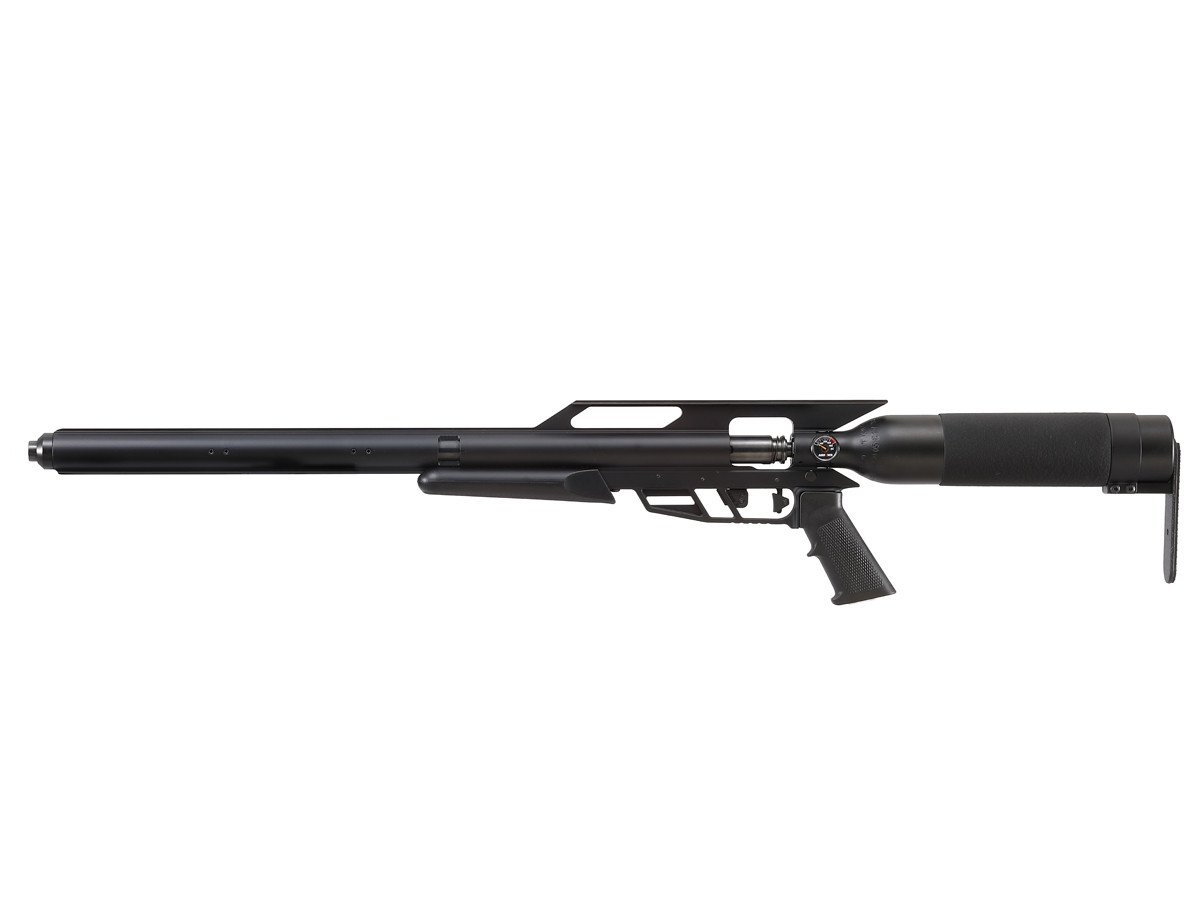
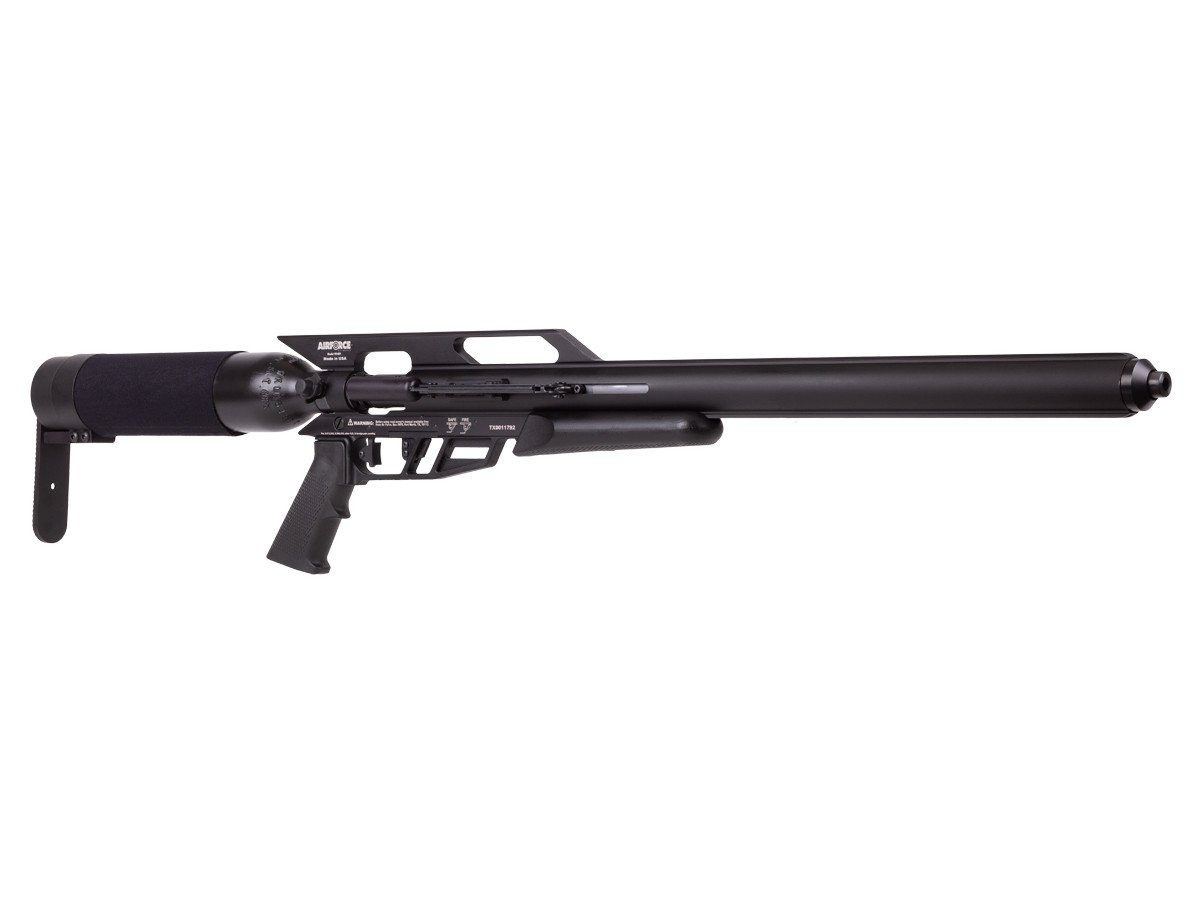
AirForce Texan Carbine
£679.00
Description
AirForce Texan Carbine Unmatched Precision, Power, and Performance
The AirForce Texan Carbine is a high-caliber airgun built for enthusiasts who demand precision, reliability, and versatility. Designed to perform in the most challenging environments, it brings together innovative engineering, robust materials, and advanced pneumatic technology. Every component has been meticulously crafted to ensure the ultimate shooting experience, whether for hunting, competitive shooting, or tactical applications.
Unlike traditional airguns, the Texan Carbine combines raw power with refined control, making it suitable for both seasoned shooters and newcomers seeking a reliable, high-performance platform. Its adaptability allows users to fine-tune performance according to their needs, from long-range accuracy to close-range impact.
Comprehensive Overview of the Texan Carbine
Understanding the AirForce Texan Carbine requires delving into its design philosophy, engineering principles, and user benefits. This overview highlights what sets it apart from other air rifles in its class.
Engineering Excellence
-
Precision-machined components for consistent shot performance
-
Aircraft-grade aluminum construction for strength without excess weight
-
Corrosion-resistant finish for long-lasting durability
The Texan Carbine’s engineering extends beyond durability. Every internal mechanism has been optimized to reduce friction, enhance efficiency, and maintain consistent velocity. As a result, users can expect reliable performance over hundreds of shots without frequent maintenance interruptions.
Versatility for All Applications
-
Suitable for medium and large game hunting
-
Ideal for long-range target shooting competitions
-
Effective in tactical training and practice environments
Its versatile design makes it a multi-purpose tool. Users appreciate the ability to switch between hunting, practice, and tactical scenarios without changing platforms. Additionally, customizable accessories allow for personalized setups, ensuring optimal comfort and functionality.

Power Meets Accuracy
-
High muzzle energy for reliable large-game impact
-
Rifled barrel ensures pinpoint accuracy at extended ranges
-
Adjustable power settings allow precision tailoring of performance
The Texan Carbine’s balance of power and precision ensures that every shot counts, whether taking down game ethically or hitting distant targets with confidence. Unlike many airguns that sacrifice accuracy for power, the Texan Carbine harmonizes both, offering uncompromising performance.
Why Hunters and Shooters Choose the AirForce Texan Carbine
Selecting the right airgun is more than picking a model; it’s choosing a partner for your shooting journey. The Texan Carbine excels in providing confidence, consistency, and control in any environment.
AirForce Texan Carbine Reliability in the Field
-
Engineered for outdoor conditions, including cold, humidity, and rough terrain
-
Minimal maintenance requirements due to robust internal design
-
Integrated safety systems to protect both user and equipment
Outdoor enthusiasts demand airguns that function flawlessly under pressure. The Texan Carbine offers peace of mind with every shot, ensuring it performs when it matters most. Hunters, competitive shooters, and tactical users alike rely on its predictable, high-powered performance.
AirForce Texan Carbine Ease of Use for All Skill Levels
-
Ergonomic design reduces shooter fatigue
-
Ambidextrous controls accommodate both left- and right-handed shooters
-
Step-by-step guidance in the manual ensures safe, intuitive operation
Even beginners find the Texan Carbine approachable. Its intuitive controls, adjustable stock, and simple refill system make it accessible without compromising performance. At the same time, advanced users can exploit its full customization potential, maximizing efficiency and precision.
AirForce Texan Carbine The Texan Carbine Advantage: Safety and Control
Safety and control are paramount in the AirForce Texan Carbine. Its design integrates features that promote responsible, confident shooting.
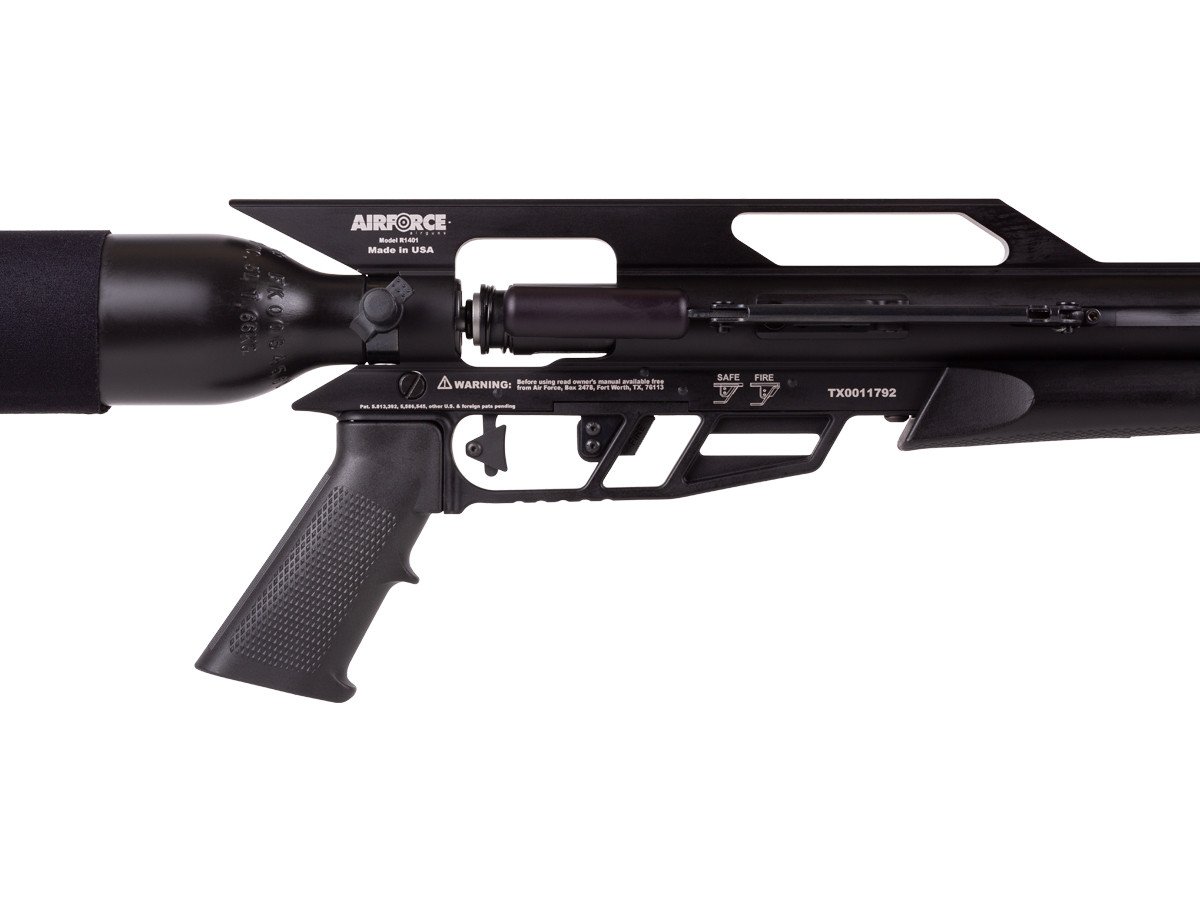
Trigger and Safety System
-
Two-stage adjustable trigger for precise shot release
-
Automatic safety engages when not in use
-
Reduced overtravel ensures consistent firing performance
The Texan Carbine’s trigger system enhances accuracy while minimizing accidental discharge risk. Users can fine-tune trigger pull to match personal preference, optimizing both comfort and performance.
Recoil and Handling
-
Advanced recoil dampening system reduces user fatigue
-
Balanced weight distribution enhances stability and control
-
Smooth ergonomics support steady follow-up shots
Recoil management is especially critical for high-caliber airguns. The Texan Carbine absorbs and distributes force effectively, enabling accurate, repeatable shots while reducing strain on the shooter.
Air Management System: The Heart of the Texan Carbine
The AirForce Texan Carbine’s performance hinges on its air management system. In essence, that system controls the volume, pressure, and flow of compressed air that propels each projectile. Because air is the engine of a PCP (pre-charged pneumatic) platform, understanding how the components interact helps you tune for consistency, efficiency, and safety.
AirForce Texan Carbine Pre-charged Pneumatic (PCP) fundamentals
-
PCP systems store high-pressure air in a cylinder so the shooter can fire multiple shots without recharging between each shot.
-
A fixed or regulated output sends air to the valve and barrel on each trigger pull.
-
The Texan Carbine uses a robust cylinder and precision valve system to deliver repeatable velocities and reduced spread shot-to-shot.
PCP advantages include higher shot counts, quieter operation (relative to equivalent powder firearms), and exceptional consistency. By contrast, spring-piston or CO₂ systems often show greater shot-to-shot variation or temperature sensitivity. Therefore, PCP is the preferred choice for shooters who want maximum control over ballistic performance.AirForce Texan Carbine
AirForce Texan Carbine Cylinder types and options
-
Integrated cylinder: mounted as part of the stock or receiver; designed for a balanced, low-profile fit.
-
Removable cylinder: quick-detach cylinders allow easy transport, swap-out during extended field use, and simplified maintenance.
-
Capacity variants: larger-volume cylinders provide more shots per fill at the cost of added weight; smaller cylinders keep the carbine lighter and more maneuverable.
Selecting a cylinder depends on your priorities. For long-range hunting, larger capacity can reduce refill frequency. For target competition where balance matters, a mid-sized cylinder often offers the best compromise. Additionally, modern cylinders are made from high-strength alloys with corrosion-resistant treatments to endure rugged conditions.
Regulators: why they matter and how they work
-
A regulator controls air pressure delivered to the valve so the carbine produces nearly identical muzzle velocities across a string of shots.
-
Without a regulator, each shot’s velocity depends on the varying pressure in the cylinder as it empties.
-
With a regulator, the Texan Carbine maintains a near-constant output pressure until the cylinder drops below the regulator’s threshold.
Regulators dramatically tighten velocity spread, which improves accuracy and reduces the amount of range-specific re-tuning you must do. When dialing in a scope or calculating holdover, predictable pellet speed simplifies ballistic solutions, therefore increasing confidence in every shot.
Typical fill pressures and expected shot counts
-
Typical fill pressures for high-caliber PCPs like the Texan Carbine commonly range from 2000 to 3000 psi, depending on caliber and cylinder design.
-
Shot counts per fill vary by caliber, power setting, pellet weight, and whether a regulator is used. Lighter pellets at moderate power produce more shots; heavier pellets at high power produce fewer.
-
Expect fewer shots in .357 compared with .25 due to greater air demand per shot, but each shot delivers higher muzzle energy.
Practical example: on a regulated setup, you might see a long string of consistent shots in the “sweet spot” where the regulator is operating optimally. Outside that window, velocity will start to taper off or fluctuate.
Fill methods: best practices and tools
-
Scuba tank (HPA) fill: fast and convenient at home or at a dive shop offering a high-pressure fill adapter.
-
Hand pump: portable and reliable for field use; requires physical effort and time.
-
Carbon fiber tanks: lightweight and portable HPA options that pair well with quick-fill adaptors.
-
Fill probe and quick-disconnect fittings simplify connection and reduce leakage risk.
When filling, always use a clean, dry air source. Moisture and oil in fill equipment can damage internal seals and regulators. Moreover, matched fittings for the Texan Carbine prevent cross-threading and minimize the chance of air loss. Always follow manufacturer-specified fill pressures and do not exceed the cylinder’s rated maximum.AirForce Texan Carbine
AirForce Texan Carbine Pressure monitoring and gauges
-
Inline gauges let you monitor cylinder pressure while filling and before use.
-
Onboard pressure gauges provide quick visual confirmation of remaining air.
-
Digital chronographs or chrony apps can help you track velocity changes across a fill and detect when the regulator leaves its sweet spot.
Consistent monitoring ensures you won’t be surprised mid-session and helps you plan refill intervals. For hunters, knowing precisely how many reliable shots remain can be critical when making ethical, effective decisions in the field.
AirForce Texan Carbine Valve systems and maintenance basics
-
High-quality valves deliver reliable metering of air per shot and help maintain consistent performance.
-
Regular inspection of the valve, bolts, and seals prevents leaks and preserves efficiency.
-
Replace O-rings and seals according to a schedule or at the first sign of wear.
Small preventative steps save time and money. For instance, lubricate moving parts with manufacturer-approved lubricant and avoid improvised oils which can degrade seal materials. Store spare O-rings and carry basic seal kits if you plan to use the Texan Carbine in remote locations.
Seasonal and environmental considerations
-
Temperature affects air density and regulator behavior; colder air yields higher pressure for a given mass, which changes velocity slightly.
-
Humidity and contaminants in the air source can accelerate seal wear or cause regulator fouling.
-
Altitude affects ballistic trajectory; therefore you may need to re-zero optics when shooting at different elevations.
In practical terms, re-check your zero after large temperature swings or altitude changes. Moreover, if you travel frequently between climates, bring a small maintenance kit and plan for quicker inspection cycles.
Troubleshooting common air management issues
-
Symptom: decreasing velocity mid-string — likely regulator droop or cylinder nearing low-pressure cutoff. Remedy: adjust fill to within regulator sweet spot or service regulator.
-
Symptom: audible hissing or loss of pressure — likely a leak at a fitting, seal, or valve. Remedy: isolate and inspect connections; replace worn O-rings.
-
Symptom: inconsistent group sizes — check pellet seating, barrel condition, and verify regulator operation. Remedy: inspect barrel crown, clean barrel with recommended tools, and confirm pellet choice/weight consistency.AirForce Texan Carbine
When troubleshooting, take a systematic approach: isolate variables by testing one change at a time. Keep a log of fills, pellet types, velocity readings, and environmental conditions to identify patterns and hone performance.
AirForce Texan Carbine Advanced tuning: balancing energy, accuracy, and efficiency
-
Lowering regulator output reduces per-shot air use, increasing shot count but decreasing muzzle energy.
-
Increasing output raises energy and terminal performance but shortens the number of usable shots.
-
Match pellet weight to power setting: heavy pellets often stabilize better at lower velocities, while light pellets can achieve flat trajectories at higher velocities.AirForce Texan Carbine
For hunting or defensible field performance, many shooters favor a mid-to-high energy setting that yields reliable penetration without consuming excessive air. For target shooting, a moderated output with a regulator tuned for maximum string consistency often yields the most repeatable groups.AirForce Texan Carbine
AirForce Texan Carbine Maintenance schedule and recommended consumables
-
Daily/Pre-use: verify cylinder pressure, inspect external fittings, and confirm trigger/safety operation.
-
Monthly: inspect external O-rings and fittings; check barrel for fouling; clean bolt face as needed.
-
Every 6–12 months: service regulator (if present), replace internal seals per manufacturer guidance, and test for leaks under pressure.
Keep spare O-rings, a small bottle of approved lubricant, a handheld pump adapter, and a basic gauge in your field pack. Additionally, log maintenance actions so you can track wear over time.
AirForce Texan Carbine Safety rules for handling compressed air
-
Never exceed rated cylinder pressure. Overfilling risks catastrophic failure.
-
Always purge pressure in a controlled manner before performing maintenance.
-
Store cylinders upright in a cool, shaded area and secure them to prevent falls.
-
Use only regulator and fill hardware rated to the system’s maximum pressure.
Respect for compressed air systems prevents accidents. Combine safe fill practices with routine inspection to ensure consistent, long-term operation of the Texan Carbine.
Real-world tips and workflow for field use
-
Start each outing by filling to a consistent pressure and noting that number in your log; repeatability creates predictability.
-
Use a chronograph early in the session to confirm your velocity string and make sight adjustments while you have air.
-
Carry a lightweight refill solution — a carbon fiber HPA tank or a quality hand pump — based on the length of your outing and the weight you’re willing to carry.
-
Experiment with pellet types at the range to discover which stabilize best at your chosen power setting; once you find a match, standardize on it for hunting reliability.
Small preparations lead to smoother sessions and better ethical outcomes in the field. Over time, you’ll build a reliable checklist that suits your shooting style.
Maintenance & Care: Keep Your Texan Carbine Performing Its Best
Regular maintenance preserves performance, improves reliability, and protects your investment. Below is a clear, practical plan that covers daily checks, periodic servicing, step-by-step light disassembly for field service, a parts checklist, and guidance on when to send the carbine to a professional.
Daily and pre-use checks
-
Visually inspect the carbine for dents, cracks, or loose components.
-
Confirm cylinder pressure is at your standard fill level and that gauges read normally.
-
Verify trigger safety engages and disengages smoothly.
-
Check optics, mounts, and rail attachments for secure fastening.
-
Ensure muzzle and barrel are clear of obstructions before firing.
A quick routine prevents many common issues. Do these checks every time you pick up the Texan Carbine, even on target-only outings.
Weekly and monthly maintenance
-
Wipe down external metal and polymer surfaces with a soft, dry cloth.
-
Clean the barrel with a recommended rod and jag; avoid aggressive brushes that can damage the crown.
-
Inspect O-rings and quick-disconnect fittings for visible wear or flattening.
-
Lightly lubricate bolt interfaces using manufacturer-approved lubricants.
-
Run a handful of practice shots through a chronograph to confirm velocity stability.
Monthly attention prevents the gradual degradation that leads to performance drops. Moreover, keeping a maintenance log helps you spot developing patterns.
AirForce Texan Carbine Six- to twelve-month service items
-
Remove and inspect the regulator (if present), and service per the manufacturer’s recommended intervals.
-
Replace main seals and O-rings that show any signs of aging, even if they still function.
-
Inspect the cylinder for internal corrosion if you suspect moisture contamination during fills.
-
Have the valve and hammer assembly checked for wear if you observe irregular shot patterns or abnormal air use.
Even if everything looks fine externally, internal wear can quietly reduce shot-to-shot consistency. Regular proactive service saves money over the long run.
AirForce Texan Carbine Step-by-step light disassembly (field-service level)
Note: always work in a clean, well-lit area. Release all pressure before beginning.
-
Confirm the cylinder pressure is 0 psi by bleeding the system per the manual.
-
Remove any mounted optics or accessories to avoid damage.
-
Unscrew and remove the cylinder following the carbine-specific instructions.
-
Inspect O-rings where the cylinder mates with the receiver; gently clean seating surfaces.
-
Pull the bolt carrier assembly enough to inspect the bolt face and seal. Wipe away carbon or lead residue.
-
Re-lubricate sliding surfaces sparingly and reassemble in reverse order, torquing fasteners to specs.
-
Refill to the recommended pressure and perform a slow-pressure test while checking for leaks.
These steps address the most common field problems without requiring a bench-level tear-down.benjamin titan np .22
Full disassembly and professional service
-
Full valve service and regulator calibration require specialized tools and should be done by trained technicians unless you have the exact tools, replacement parts, and experience.
-
If you detect unusual noises, persistent leaks, or significant velocity fluctuations, stop using the carbine and consult a professional.
-
Keep service records and serial numbers ready when sending the carbine for warranty or out-of-warranty service.
When in doubt, choose a reputable service center. Attempting advanced repairs without proper training risks damage and voids warranties.benjamin titan np .22
Recommended consumables and tools to keep on hand
-
Spare O-rings in assorted sizes (manufacturer-specified kit recommended).
-
Bottle of approved pneumatic lubricant and small applicator.
-
Cleaning rod, brass jag, patches, and a suitable solvent for lead or alloy pellets.
-
Inline pressure gauge and small hand pump or mini HPA tank for emergency fills.
-
Small torque wrench and hex/torx set for mounting hardware.
Having these items minimizes downtime and keeps you safe and prepared on longer outings.
Storage and transport best practices
-
Store the Texan Carbine in a cool, dry place with the cylinder either depressurized or locked according to the manual.
-
Use a padded case for transport, and secure the carbine to prevent shifting that could stress mounts or optics.
-
When traveling by vehicle, secure the cylinder in a rack or hold to prevent accidental impacts.
Smart storage preserves zero and extends the life of seals and finishes.AirForce Texan Carbine
AirForce Texan Carbine Ballistics & Ballpark Performance: Real-World Numbers and Loadout Guidance
Understanding ballistics helps you choose the right caliber, pellet, and power setting for your goals. The figures below are illustrative ballpark numbers intended to guide choices; specific results vary by pellet brand, barrel condition, regulator tuning, and environmental factors.AirForce Texan Carbine
Key ballistic concepts (plain language)
-
Muzzle energy measures the kinetic energy delivered at the muzzle (usually foot-pounds or joules).
-
Velocity is how fast the pellet leaves the barrel (feet per second, fps).
-
Ballistic coefficient (BC) describes how well a pellet keeps speed downrange; higher BCs retain energy and resist wind drift.
-
Trajectory and drop determine how you aim at different distances; flatter trajectory reduces holdover.
Grasping these basics helps you match the Texan Carbine’s settings to practical objectives like ethical hunting or tight groupings at known ranges.airforce airguns
Ballpark performance by caliber (typical ranges)
-
.25 caliber:
-
Velocity range: ~700–1000 fps depending on pellet weight and power.
-
Muzzle energy: roughly 60–120 ft·lb.
-
Best for medium game at moderate ranges with the right pellet and power.
-
-
.30 caliber:
-
Velocity range: ~650–900 fps depending on setup.
-
Muzzle energy: roughly 90–160 ft·lb.
-
Suited for larger game and deeper penetration; choose heavy, high-BC pellets for terminal performance.
-
-
.357 caliber:
-
Velocity range: ~500–750 fps depending on pellet mass and power.
-
Muzzle energy: roughly 150–250+ ft·lb.
-
Optimized for large game or where deep penetration is required; heavier projectiles trade velocity for momentum.
-
Remember: heavier pellets produce more retained energy and deeper penetration, whereas lighter pellets travel faster with a flatter initial trajectory.
AirForce Texan Carbine Features:
- Pre-charged pneumatic
- Single-shot
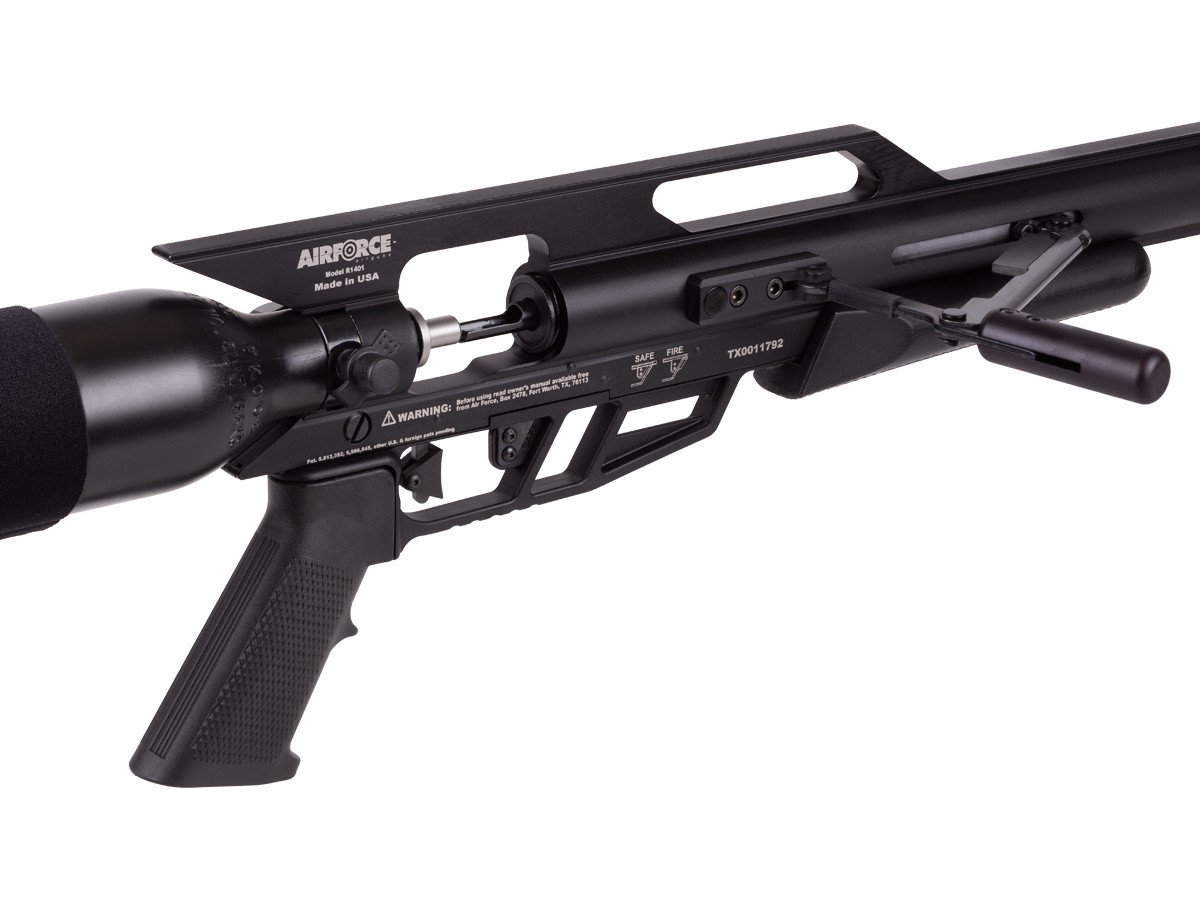
- Sidelever
- 2-stage trigger (adj. for position only)
- 2.06-lb. trigger-pull
- Automatic safety
- Textured grip
- 490cc tank
- Pressure-relief device
- 3000 psi (200 bar) max fill pressure
- Adjustable power
- Extended optics rail
- 7.5 lbs.
- Buttplate can be rotated right and left for some cast-on and cast-off adjustability
- Highly accurate Lothar Walther barrel
- Made in USA
 Click here for California’s Proposition 65 warning.
- ManufacturerAirForce
- Caliber .357
- Velocity 1065 fps
- Condition New
- Ammo Type Pellets
- Action Sidelever
- Barrel Style Rifled
- Fire Mode Single-shot
- Gun Weight 7.50
- Overall Length 39.00
- Barrel Length 25.00
- Loudness 5-High
- Mechanism Pre-charged pneumatic
- Rail 11mm dovetail
- Safety Automatic
- Front Sights none
- Rear Sights none
- Shots per Fill 5
- Trigger Adjustability Two-stage adjustable
- Trigger Action 0
- Use Hunting
- Warranty Lifetime limited warranty
Sample trajectory and energy scenarios (illustrative)
-
.25 caliber, 30-grain pellet at 900 fps:
-
Muzzle energy ≈ 54 ft·lb.
-
Retains useful energy to ~50–60 yards for small-to-medium game depending on shot placement.
-
-
.30 caliber, 120-grain slug at 750 fps:
-
Muzzle energy ≈ 150 ft·lb.
-
Maintains solid terminal performance past 60 yards with proper shot angles and pellet selection.
-
-
.357 caliber, 200-grain projectile at 650 fps:
-
Muzzle energy ≈ 187 ft·lb.
-
Effective for large game within practical field ranges when placed accurately.
-
Again, these numbers are examples. Test on a chronograph with your chosen pellets and power setting to develop a precise ballistic table for your Texan Carbine.
Selecting pellets for consistent performance
-
Match pellet weight to energy settings; heavier pellets stabilize at lower velocities and usually improve penetration.
-
Consider pellet shape: slugs often offer better BCs and penetration, while domed pellets can provide tighter groups in rifled barrels.
-
Test multiple brands and lots; manufacturing variances influence accuracy.
Standardize on the pellet type that yields consistent, ethical terminal performance for your intended game or target distances.
AirForce Texan Carbine Sight-in strategy and range estimation
-
Start by zeroing at a moderate distance such as 25 yards to confirm group placement, then confirm at your hunting or competition distance (e.g., 50 or 75 yards).
-
Use a chronograph to record your muzzle velocity and compute holdovers or use ballistic apps for trajectory curves.
-
Adjust optics based on average environmental conditions you expect to encounter; large temperature or elevation changes require re-checking zero.
Practical sight-in avoids surprises and supports ethical shot placement under field conditions.357 air rifle deer hunting price
AirForce Texan Carbine Power settings and practical shot-count planning
-
Use a regulated sweet spot whenever possible; it yields predictable strings and simplifies ballistic compensation.
-
For hunting outings, plan on fewer high-energy shots rather than many marginal-energy shots. Quality of impact matters more than raw shot count.
-
Carry an emergency fill solution if you expect to be far from a refill point, and dial power according to mission: target practice typically uses lower power to conserve air.
A deliberate plan for power usage reduces risk and maximizes effectiveness.
Ethical shot placement and humane considerations
-
Prioritize shots within known effective range where you can place projectiles precisely.
-
Use heavier pellets and higher energy settings for larger game to ensure adequate penetration and humane results.
-
If shot placement is uncertain, do not shoot; instead reposition or wait for a clearer opportunity.
Ethical hunting means combining gear knowledge with restraint and responsibility.
Additional information
| Select Caliber | .257, .30, .357, .457, .510 |
|---|
Related products
-
-
-
AirForce Texan SS Carbon-Fiber Tank
£900.00Select options This product has multiple variants. The options may be chosen on the product page -
AirForce Texan Carbine Carbon-Fiber Tank
£800.00Select options This product has multiple variants. The options may be chosen on the product page
Reviews
There are no reviews yet.